…
Energy Efficiency: The First Fuel for EU energy Transition
Energy management solutions: Successful projects in Europe
We are pleased to present our brochure, Energy Efficiency: The First Fuel for EU Energy Transition, showcasing a range of successful energy management projects led by Energy Efficiency for Europe’s members across Europe. Through their projects, you get to better know our members, Energy Service Companies (ESCOs) as well as their national associations, who work tirelessly to drive the EU’s energy transition through reduced emissions, cost savings, and increased efficiency.
At Energy Efficiency for Europe, we believe that energy efficiency is the backbone of a sustainable future, with our members achieving lasting energy and CO₂ savings through Energy Performance Contracts (EnPCs) and district heating and cooling (DHC) networks. Our members implement EnPCs to guarantee energy savings by managing all project phases, enabling clients to meet sustainability targets affordably, whilst DHC networks provide centralised, efficient heating and cooling solutions by harnessing local renewable sources like biomass, geothermal, and industrial waste heat for lower emissions and greater energy resilience across Europe.
..
Inside the Brochure: Key Projects and Achievements
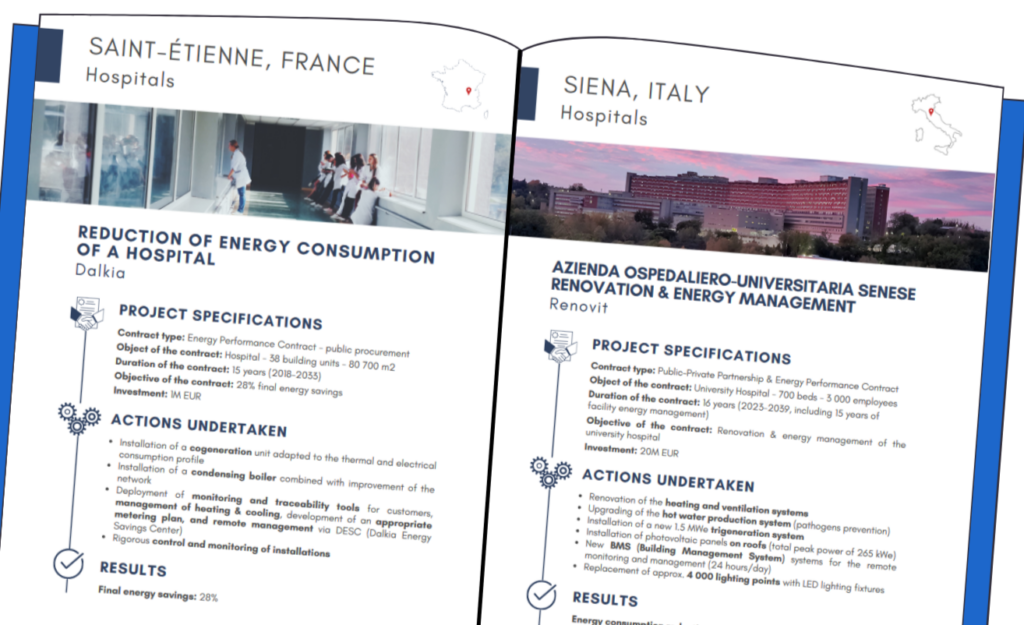
This brochure highlights some best practice cases undertaken by Energy Efficiency for Europe’s members across multiple sectors:
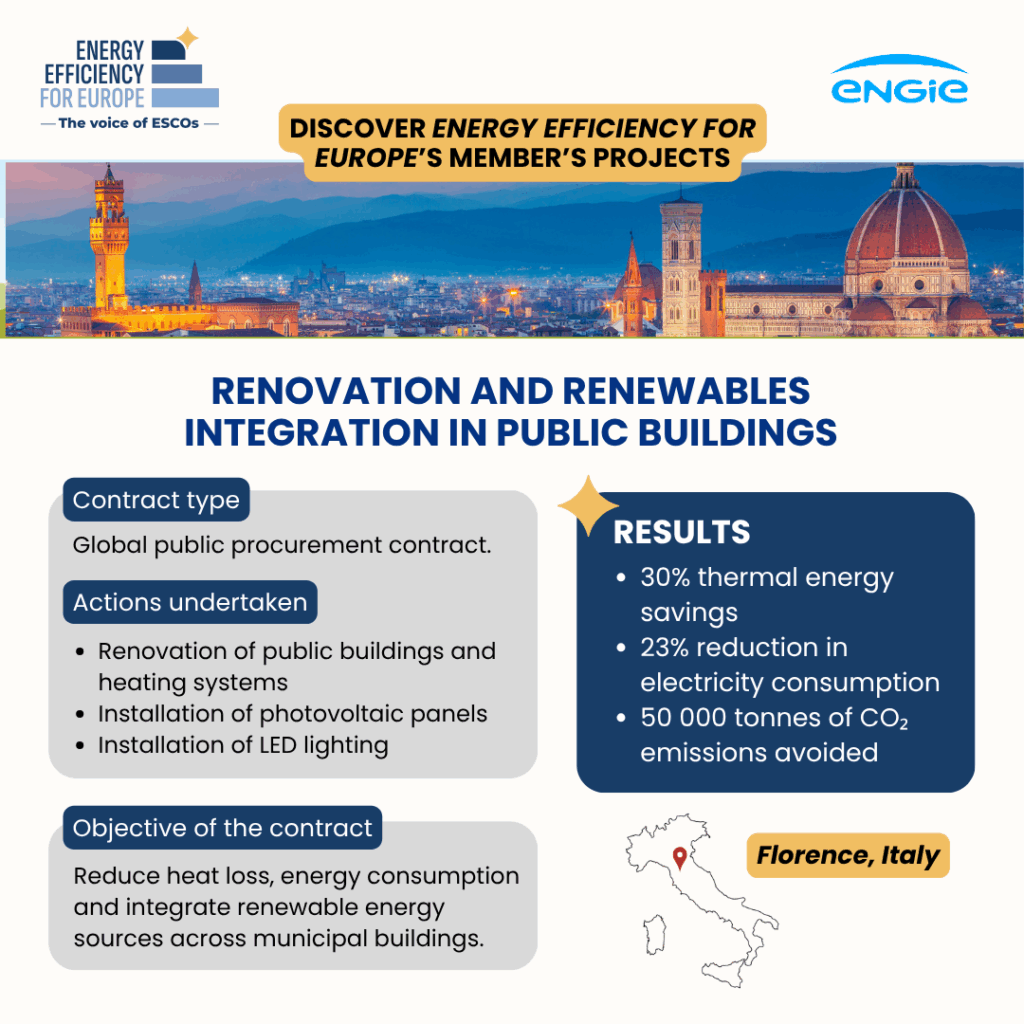
- Public buildings: In Florence, Italy, a municipal renovation project successfully reduced thermal energy consumption by 30%, integrating renewable energy sources like photovoltaic panels, and saving 50,000 tonnes of CO₂. Another example in France includes a military base retrofit that achieved a 21% reduction in final energy consumption, combining technical enhancements with user education.
- Schools: Initiatives like the Romania Eficientă project, transformed public schools into Near Zero Emission Buildings (nZEB) and reduced energy costs by approximately 30%. This project also fosters actions to raise energy awareness among students, and staff.
- Hospitals: At UZ Ghent Hospital in Belgium, energy management efforts optimised gas, steam, electricity, and water usage, providing a more sustainable and comfortable environment for patients and staff.
- Housing: In France, a social housing project was enhanced by integrating a district heating network powered by local renewable biomass energy. Our member’s actions not only cut energy costs for residents, but also resulted in annual CO₂ savings of over 4,300 tonnes.
- Industry and grids: Our brochure also explores energy efficiency for the industry sector, such as in the case of the Steelanol plant in Belgium, where Energy Efficiency for Europe’s member transformed flue gases from steel production into bioethanol, reducing greenhouse gas emissions equivalent to removing 60,000 cars from the road each year.